Title: The 2026 Fed Pause: Why Jerome Powell is Holding the Line at 3.75%
29 stycznia 2026
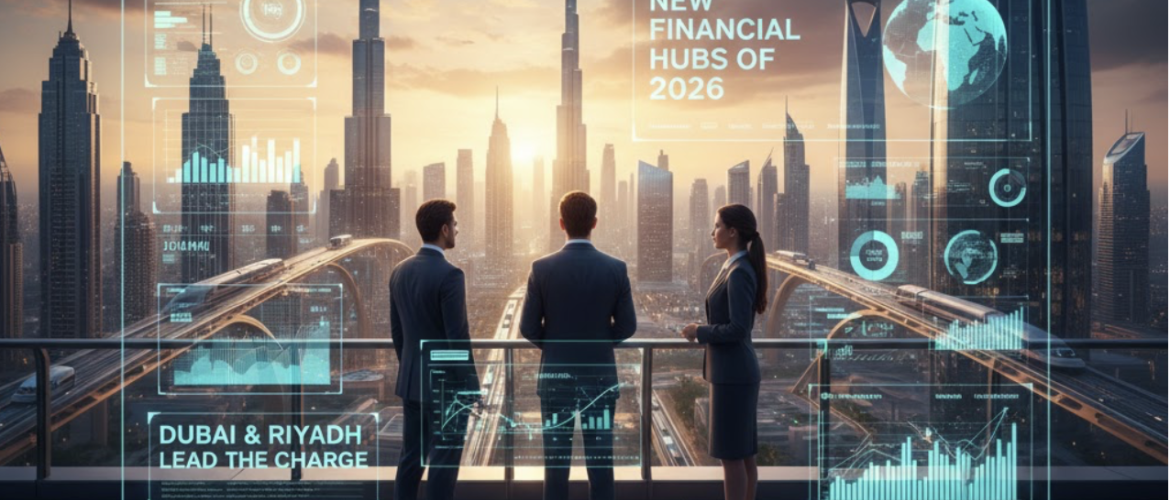
The year 2026 marks a decisive turning point in the global financial landscape. For decades, the axes of global capital revolved around established centers like London and New York. While these titans retain their influence, a compelling new narrative is unfolding, driven by geopolitical shifts, technological acceleration, and ambitious national visions. The gravitational pull of capital is demonstrably shifting towards emerging powerhouses in the Middle East—specifically Riyadh and Dubai—and, to a lesser extent, dynamic centers in Southeast Asia. This redistribution of economic might is not merely a transient trend but a structural change that demands attention from investors, innovators, and policymakers alike.
The Rise of the MENA Region: Dubai and Riyadh as New Financial Capitols The transformation of the Middle East and North Africa (MENA) region into a global financial nexus is one of 2026's most compelling stories. Dubai, often dubbed the "new Switzerland" for technology and capital, continues to attract an unprecedented influx of talent and investment, particularly in fintech, AI, and green energy. This growth is fueled by visionary leadership, state-of-the-art infrastructure, and a robust regulatory environment designed to foster innovation. Riyadh, meanwhile, is rapidly emerging as a formidable competitor, powered by Saudi Arabia's Vision 2030, which seeks to diversify its economy away from oil. Both cities offer attractive tax incentives, strategic geographic locations, and a commitment to stability that resonates strongly with international investors seeking long-term growth opportunities.
Beyond Traditional Markets: The Allure of Stability and Innovation The appeal of these new financial hubs extends beyond mere economic incentives. A critical factor is the perceived political stability and consistent regulatory frameworks they offer, which stands in contrast to the volatility sometimes observed in more traditional Western markets. This stability, coupled with aggressive investment in future-proof technologies and smart city initiatives, creates a potent ecosystem for innovation. For global enterprises and digital asset owners, establishing a strong presence in these regions is no longer an option but a strategic imperative. It provides access to vast untapped markets and a youthful, digitally native population eager for advanced services.
Soft Power and the Urban Metamorphosis The development of these new financial centers is also a testament to the power of "soft power"—the ability to attract and persuade through cultural and economic influence. Cities like Dubai and Riyadh are undergoing a dramatic urban metamorphosis, transforming into vibrant, multicultural hubs that offer a high quality of life, world-class amenities, and unparalleled connectivity. These are not just places to do business; they are places where global leaders and innovators choose to live, work, and build. This holistic approach to urban development further solidifies their position as indispensable nodes in the global financial network of 2026.
Conclusion As we navigate the complexities of 2026, the rebalancing of global financial power is undeniable. The rise of Dubai and Riyadh as pivotal centers of capital and innovation marks a new era, challenging old paradigms and creating unprecedented opportunities. For those who understand these shifts and position their assets strategically, the future is not just about adapting to change, but actively shaping it from these dynamic new epicenters of global commerce.